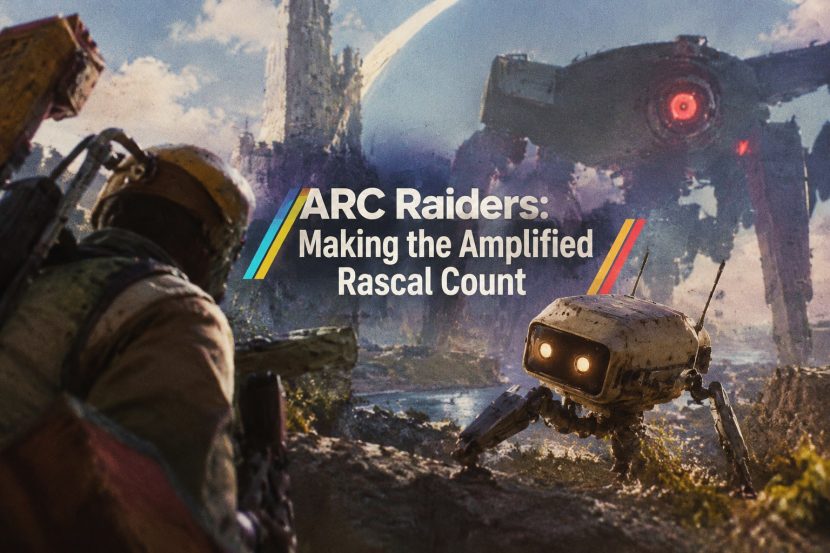
ARC Raiders Items are an important part of preparing for difficult raids, and the Amplified Rascal deserves attention from players who want a specialized weapon for fighting ARC enemies. Its single-round launcher design rewards accurate shots and careful timing, while its amplification options let players tailor the weapon to different combat situations.
Rather than relying on continuous fire, the Rascal is built around making each projectile count. Its explosive rounds detonate when they hit ARC enemies, and its three amplification paths—High Velocity, Incendiary Grenades, and Sprint Shooting—offer different ways to improve its usefulness in the field.
What Makes the Amplified Rascal Worth Building?
The Rascal uses Launcher Ammo and has a single-round magazine, so every shot requires careful timing. Its explosive projectile is designed to detonate on ARC enemies, making target selection and firing position important parts of its gameplay.
Unlike a conventional rifle, the Rascal cannot maintain continuous pressure through repeated shots without reloading. A missed projectile can leave you temporarily unable to attack, especially when an ARC enemy is moving or forcing you out of cover.
Amplification gives the weapon three different paths:
- High Velocity: Improves projectile speed, helping you deal with moving targets.
- Incendiary Grenades: Adds burning damage over time, with trade-offs to direct projectile performance.
- Sprint Shooting: Allows you to fire while sprinting, supporting a more mobile playstyle.
These options reward different habits. Before committing to one, think about whether you need more reliable projectile travel, additional burn pressure, or greater flexibility while moving.
High Velocity: A Practical Choice for Moving ARC Targets
High Velocity focuses on projectile speed. This matters when an ARC enemy changes position between the moment you fire and the moment the projectile arrives.
The upgrade can make the Rascal easier to use against moving targets, but it does not eliminate the need for good aim. You still need a clear firing angle and enough awareness to avoid wasting your only loaded shot.
For better results, watch the target’s movement before firing. Try to shoot when it enters an open area or follows a predictable path. After the shot, use cover to manage the reload instead of remaining exposed while preparing your next attack.
High Velocity is a sensible choice if your main frustration with the Rascal is landing hits consistently.
Incendiary Grenades: Trade Immediate Impact for Burning Pressure
Incendiary Grenades add a damage-over-time effect, giving successful hits additional value after the initial impact. The listed amplification effect adds burn damage and extends the burning duration, but it also reduces direct projectile damage and velocity.
That trade-off changes how you should evaluate the upgrade. It is not simply a free damage increase. You are exchanging some immediate projectile performance for a longer-lasting effect.
This path can suit players who want to maintain pressure after hitting an ARC enemy, particularly when they need to reposition instead of immediately firing again. However, the slower projectile and lower direct damage make accurate target selection even more important.
Choose this route when the burning effect supports your usual combat rhythm. If you prefer to maximize the reliability of a direct hit against a moving target, High Velocity may fit your needs better.
Sprint Shooting: Keep Moving Without Giving Up Every Attack Opportunity
Sprint Shooting lets the Rascal fire while sprinting, making it an option for players who frequently move between cover or reposition during an encounter.
Its main benefit is flexibility. Instead of treating movement and attacking as completely separate actions, you can incorporate a shot into a more mobile approach when the situation allows.
However, Sprint Shooting does not remove the Rascal’s one-round limitation. You still need to plan around reloading, and firing while moving does not guarantee that a projectile will hit its target.
Use this path if you frequently lose opportunities because you need to stop before firing. If you generally fight from stable positions and prioritize careful aim, another amplification may offer more practical value.
Amplified Rascal vs Amplified Anvil
The Amplified Anvil provides a useful comparison because its two major paths emphasize different attack patterns. X-Rounds improves its focus on ARC armor, while Anvil Splitter turns each shot into four weaker projectiles. These choices are mutually exclusive.
| Feature | Amplified Rascal | Amplified Anvil |
|---|---|---|
| Weapon role | Explosive launcher focused on ARC encounters | Heavy-ammo hand cannon |
| Ammunition | Launcher Ammo | Heavy Ammo |
| Magazine | One round | Six rounds |
| Main upgrade choices | High Velocity, Incendiary Grenades, Sprint Shooting | X-Rounds or Anvil Splitter |
| Main consideration | Projectile timing and reload windows | Precision, recoil, and choosing the right firing pattern |
The Rascal is better suited to Raiders who want a specialized explosive option and are comfortable managing a single round at a time. Its amplification choices let players adapt projectile behavior, burning pressure, or movement.
The Anvil offers a different kind of flexibility. X-Rounds adds five base damage and increases damage against ARC armor by 33%, but reduces bullet velocity and increases recoil. Anvil Splitter creates a four-projectile pattern, trading away damage per projectile and some headshot effectiveness.
Neither weapon is automatically better in every situation. The Rascal emphasizes launcher-specific timing, while the Anvil provides a heavy hand cannon platform with two distinct amplification paths.
Which Weapon Should You Invest In?
Choose the Amplified Rascal if you want a dedicated launcher for ARC encounters and value its specialized projectile behavior. It is particularly appealing if one of its three amplification paths addresses a weakness in your current playstyle.
Choose the Amplified Anvil if you prefer a six-round hand cannon and want to specialize in either armor-focused explosive shots or a multi-projectile firing pattern.
Before investing, consider the ammunition you can maintain, the materials required for your preferred upgrade, and how often you expect to use the weapon. An expensive amplification is only worthwhile when it supports the encounters you regularly face.
Upgrade Planning and Progression
Amplification is part of the Frozen Trail progression system. To access it, you need the Outpost and the required workshop upgrades. The Rascal requires an Amplification Module Mk. III, while the Anvil also uses a Mk. III module because of its Rare rarity.
The Anvil’s X-Rounds path requires the Embedded Blast Engineering research, whereas Anvil Splitter follows a separate route. The Rascal’s amplification choices have their own requirements, so check the current Research Station and weapon upgrade screens before spending materials.
Players exploring ARC Raiders Boosting for faster progression should still understand these differences before committing resources. Progression support may help you reach an upgrade sooner, but choosing the correct branch remains important because weapon amplification cannot simply be reversed after activation.
The Amplified Rascal and Amplified Anvil serve different combat preferences. The Rascal is a specialized launcher whose value depends on careful shot timing and choosing between projectile speed, burning pressure, and mobility. The Anvil is a heavy hand cannon that lets you commit to either armor-focused X-Rounds or the four-projectile Splitter path.
If your goal is to improve your performance against ARC enemies with a dedicated launcher, start with the Rascal and identify which amplification best addresses your weaknesses. Use the Anvil as a reference for a different approach to the same encounters, and invest only after checking the current upgrade requirements and trade-offs.